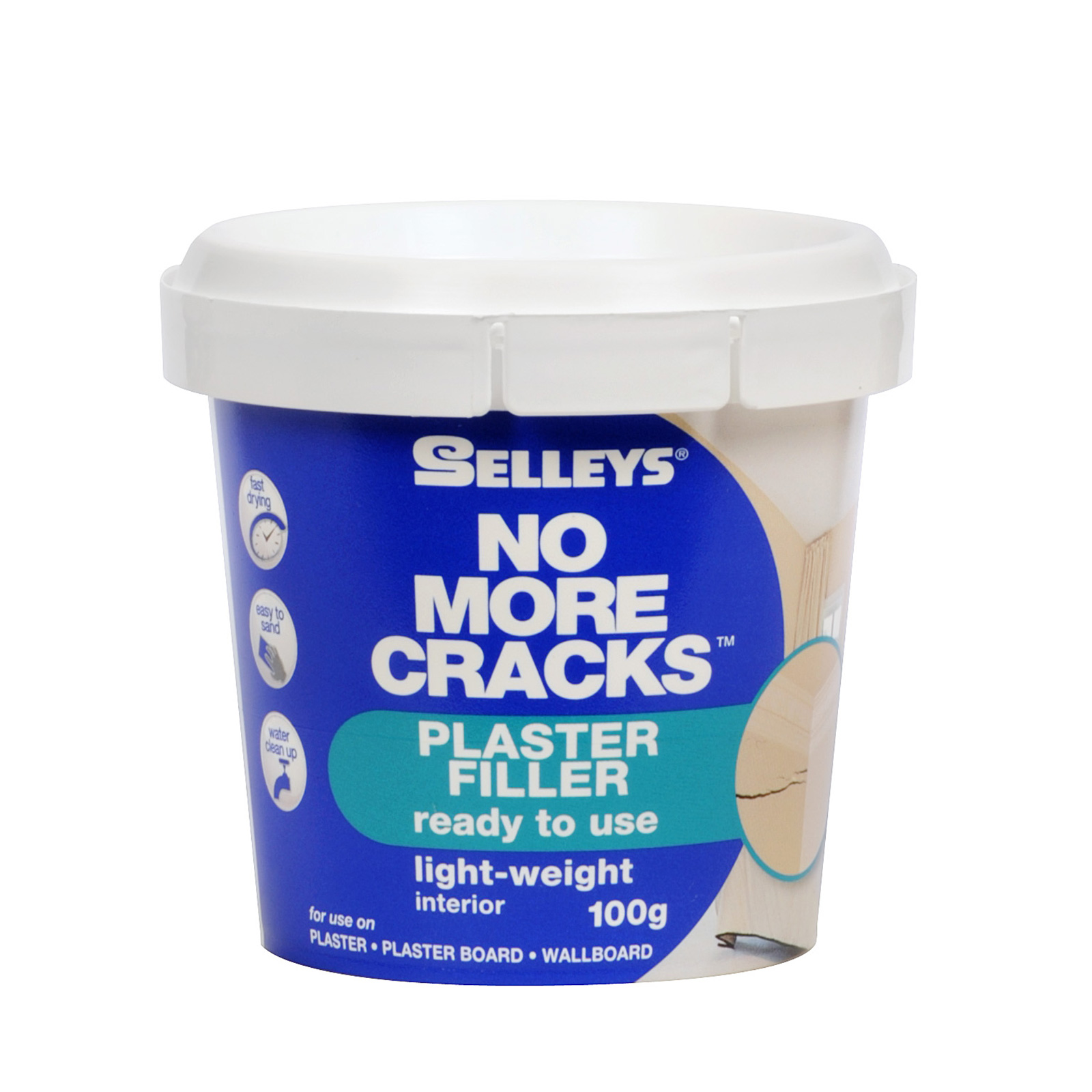
Product Facts
- Product Name
- Selleys No More Cracks Plaster Filler - 100g
- Availability
- In Stock
- Condition
- New
- Category
- Home & Garden > Paint Preparation & Fillers > Wall Fillers
- Seller
- Selleys
Selleys No More Cracks Plaster Filler - 100g
Fast drying, lightweight plaster filler for interior use. Easily fills gaps, cracks, chips, dents and other imperfections in plaster, plasterboard and wallboards. Features excellent adhesion, minimum shrinkage, and can be sanded in 30 minutes for thin applications. Water cleanup and ready to use.
Product Data (OpenAI Spec)
View Full JSON Spec ↗Specifications
| Colour | White |
|---|---|
| Density | 0.48 |
| Packaging | 100 g tub 220 g tub |
| Technology | Water-based |
| Limitations | Do not use below 5°C Do not nail Interior use only Not recommended for plastic or metal surfaces Where movement occurs use Selleys No More Gaps |
| Sand/Paint Time | 30 minutes (less than 2 mm depth) |
| Directions for Use | 1. Ensure surface is clean and dry. 2. Press filler firmly into surface. 3. Allow 30 minutes to dry for thin applications. 4. Allow 24 hours if painting with solvent-based paints. 5. Sand before painting. 6. Clean tools with water before filler sets. |
Product Intelligence
Selleys No More Cracks RTU Plaster Filler - Technical Details & Specifications
Product Overview
Selleys No More Cracks RTU Plaster Filler is a ready-mixed interior filler specifically designed for plaster surfaces. This product offers convenience through its pre-mixed formulation, eliminating the need for on-site mixing before application.
Product Identification
- Product Name: SELLEYS NO MORE CRACKS RTU PLASTER FILLER
- Product Code: 930069712207001
- Bar Code: 9300697122070
- Package Size: 100g tub
- Recommended Use: Ready mixed interior filler for plaster
Physical and Chemical Properties
Form and Appearance
- Form: Paste
- Colour: White
- Odour: Mild, characteristic
- Solubility: Information not specified in available data
Key Physical Parameters
| Property | Value |
|---|---|
| Specific Gravity | >6,000P (viscosity measurement) |
| Relative Vapour Density (air=1) | Not available |
| Vapour Pressure | Not available |
| Flash Point (°C) | Not applicable |
| Boiling Point/Range (°C) | Not available |
| pH | Not applicable |
| Total VOC (g/Litre) | Not available |
Note: Consult the specification sheet for typical values and complete property information.
Hazard Classifications
This material is classified as hazardous according to the criteria of Safe Work Australia GHS 7.
Specific Hazards
- Eye Irritation - Category 2A
- Skin Sensitisation - Category 1
Hazard Statements
- H317: May cause an allergic skin reaction
- H319: Causes serious eye irritation
Safety Precautions
Prevention Measures
- Keep out of reach of children (P102)
- Read carefully and follow all instructions (P103)
- Avoid breathing dust, fume, gas, mist, vapours or spray (P261)
- Wash hands, face and all exposed skin thoroughly after handling (P264)
- Contaminated work clothing should not be allowed out of the workplace (P272)
- Wear protective gloves/protective clothing including eye/face protection (P280)
Personal Protection Equipment
- Recommended protection: Safety shoes, overalls, gloves, safety glasses
- Glove material: Nitrile rubber gloves are suitable for intermittent contact
- Always wash hands before smoking, eating, drinking or using the toilet
- Wash contaminated clothing and protective equipment before storing or reusing
Response and First Aid
- Skin contact: Wash with plenty of water and soap (P302+P352)
- Eye contact: Rinse cautiously with water for several minutes. Remove contact lenses if present and continue rinsing (P305+P351+P338)
- Skin irritation: If irritation or rash occurs, get medical advice/attention (P333+P313)
- Eye irritation: If eye irritation persists, get medical advice/attention (P337+P313)
- Contaminated clothing: Take off contaminated clothing and wash before reuse (P362+P364)
Handling and Storage
Storage Requirements
- Store in a cool, dry, well-ventilated place away from direct sunlight
- Store away from foodstuffs
- Store away from incompatible materials (oxidising agents)
- Store away from sources of heat and/or ignition
- Keep container standing upright
- Keep containers closed when not in use and check regularly for spills
Handling Precautions
- Avoid eye contact and repeated or prolonged skin contact
- Avoid inhalation of dust
- Ensure eyewash stations and safety showers are close to the workstation location
Stability and Reactivity
- Chemical Stability: This material is thermally stable when stored and used as directed
- Conditions to Avoid: Elevated temperatures and sources of ignition
- Incompatible Materials: Oxidising agents
- Hazardous Decomposition Products: Oxides of carbon and nitrogen, smoke and other toxic fumes
- Hazardous Reactions: No known hazardous reactions
Fire Fighting Information
- Suitable Extinguishing Media: Water fog, alcohol resistant foam, standard foam, or dry agent (carbon dioxide, dry chemical powder)
- Specific Hazards: Non-combustible material
- Fire Fighting Advice: Not combustible; however, following evaporation of aqueous component, residual material can burn if ignited
Toxicological Information
Acute Effects
- Inhalation: Material may be an irritant to mucous membranes and respiratory tract
- Skin Contact: Contact with skin may result in irritation. A skin sensitiser. Repeated or prolonged skin contact may lead to allergic contact dermatitis
- Ingestion: Swallowing can result in nausea, vomiting and irritation of the gastrointestinal tract
- Eye Contact: May be an eye irritant. Exposure to dust may cause discomfort due to particulate nature
Acute Toxicity Classification
- Inhalation: Not hazardous for acute inhalation exposure (LC50 > 5.0 mg/L for dust)
- Skin Contact: Not hazardous for acute dermal exposure (LD50 > 2,000 mg/Kg body weight)
- Ingestion: Not hazardous for acute ingestion exposure (LD50 > 2,000 mg/Kg body weight)
- Aspiration Hazard: Not classified as an aspiration hazard
Chronic Toxicity
- Mutagenicity: Not a mutagen
- Carcinogenicity: Not a carcinogen
- Reproductive Toxicity: Not a reproductive toxicant
Regulatory Classification
- Poison Schedule: Not Applicable
- Dangerous Goods Status: Not classified as Dangerous Goods by the criteria of the Australian Code for the Transport of Dangerous Goods by Road & Rail or New Zealand NZS5433: Transport of Dangerous Goods on Land
Chemical Composition
The product contains the following key components:
| Chemical Entity | CAS Number | Proportion |
|---|---|---|
| Alcohols, C12-C14, ethoxylated, sulfates, sodium salts | 68891-38-3 | 1 - 10% (w/w) |
| 1,2-Benzisothiazol-3(2H)-one (BIT) | 2634-33-5 | <0.05% (w/w) |
| 5-Chloro-2-methyl-4-isothiazolin-3-one (CMIT) | 26172-55-4 | <0.05% (w/w) |
| 2-Methyl-2H-isothiazol-3-one (MIT) | 2682-20-4 | <0.05% (w/w) |
| 2-Octyl-2H-isothiazol-3-one (OIT) | 26530-20-1 | <0.1% (w/w) |
| Non-hazardous ingredients | — | Balance |
Supplier Information
- Supplier: Selleys, a division of DuluxGroup (Australia) Pty Ltd
- ABN: 67 000 049 427
- Address: 1956 Dandenong Road, Clayton VIC 3168, Australia
- Telephone: 1300 555 205
- Emergency Telephone: Australia – 1800 220 770; New Zealand – 0800 220 770
Important Notes
- All components are listed on or exempt from the Australian Inventory of Industrial Chemicals (AIIC)
- All components are listed on or exempt from the New Zealand Inventory of Chemical (NZIoC)
- The Safety Data Sheet should be reviewed in its entirety prior to usage
- Users must assess the product's suitability for their specific workplace conditions
References
- [1] SELLEYS_NO_MORE_CRACKS_RTU_PLASTER_FILLER-AUS_GHS.pdf